
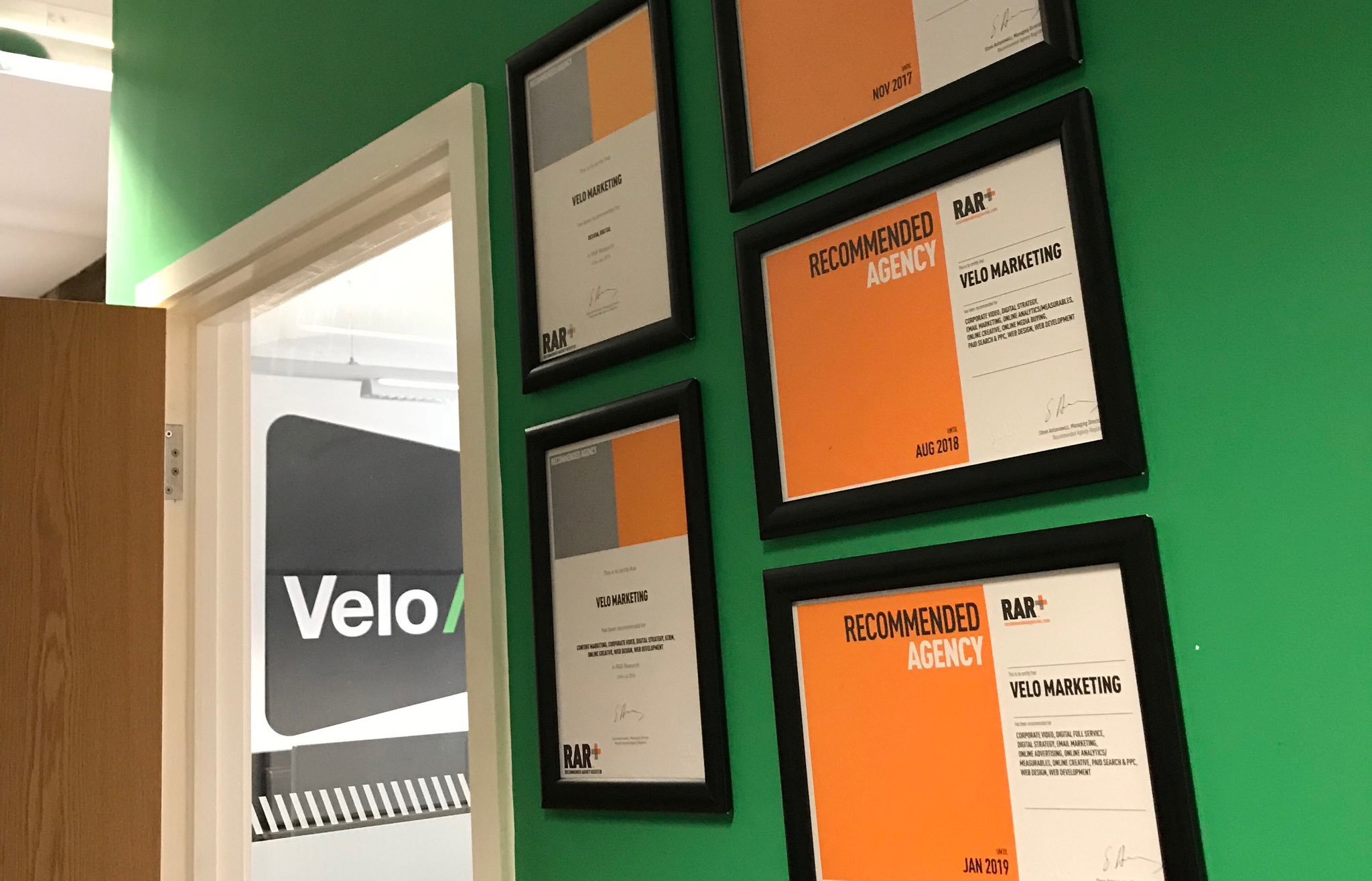
 Even back in 2010 when the agency began, one lesson has been constant. We see examples of it in our twice-yearly client feedback survey commissioned through an independent research firm, The Drum, so we know we’re on to something. Particularly as benchmarking us against other agencies of our size has seen us continuously ranked in the upper echelons of UK-based agencies.
And the lesson is this: At Velo, creating value for our clients is essential. As an agency, if you don’t create value, you get fired.
We have some client relationships stretching back almost a decade, including huge multi-national companies and FTSE 100 engineering firms. In this time, these businesses and our contacts within have changed to be hardly recognisable, but our approach has remained the same.
We’ve built a 4-step formula that we encourage our teams to always follow:
1. Create value ….. through results
Ultimately, you live and die by the outcomes your expertise delivers, and you need to have the evidence to prove it.
That is not as simple as it sounds. With integrated campaigns, proving the impact of individual elements is always hard. Likewise, videos influence brand perceptions and drive leads, but their traditional measures focus on engagement too. Visual identity refreshes have organisational wide impact amplifying other good work and can never be evaluated in isolation.
But with these challenges, the fact remains that as a client’s agency, we must be able to show what impact and benefit we have provided for the investment made.
And how do we do it? Through a combination of tactical tools, such as reporting awareness, engagement conversions via Google Data Studio, but most importantly by building relationships. This rapport positions us as a trusted partner so we are privy to the confidential metrics that are important to our clients and their organisation.
2. ….through contextual relevance
To quote English poet John Donne, “No man is an island”. True. We all work with internal and external influences. To do our best work, our team looks to ascertain the “why” not just the “what” and understand all the influences on a client.
Wider than activity briefs, this is the context in which our contacts are making decisions – their strategy, their organisation (and its politics), their market, their customers, their budget and their objectives (personal and professional).
When we understand this context we can make relevant recommendations that are practical and useful reinforcing our position as a trusted partner.
From day one, our approach to client service has been to make our client a hero. And the only way you can do this is by understanding the landscape in which they operate.
Even back in 2010 when the agency began, one lesson has been constant. We see examples of it in our twice-yearly client feedback survey commissioned through an independent research firm, The Drum, so we know we’re on to something. Particularly as benchmarking us against other agencies of our size has seen us continuously ranked in the upper echelons of UK-based agencies.
And the lesson is this: At Velo, creating value for our clients is essential. As an agency, if you don’t create value, you get fired.
We have some client relationships stretching back almost a decade, including huge multi-national companies and FTSE 100 engineering firms. In this time, these businesses and our contacts within have changed to be hardly recognisable, but our approach has remained the same.
We’ve built a 4-step formula that we encourage our teams to always follow:
1. Create value ….. through results
Ultimately, you live and die by the outcomes your expertise delivers, and you need to have the evidence to prove it.
That is not as simple as it sounds. With integrated campaigns, proving the impact of individual elements is always hard. Likewise, videos influence brand perceptions and drive leads, but their traditional measures focus on engagement too. Visual identity refreshes have organisational wide impact amplifying other good work and can never be evaluated in isolation.
But with these challenges, the fact remains that as a client’s agency, we must be able to show what impact and benefit we have provided for the investment made.
And how do we do it? Through a combination of tactical tools, such as reporting awareness, engagement conversions via Google Data Studio, but most importantly by building relationships. This rapport positions us as a trusted partner so we are privy to the confidential metrics that are important to our clients and their organisation.
2. ….through contextual relevance
To quote English poet John Donne, “No man is an island”. True. We all work with internal and external influences. To do our best work, our team looks to ascertain the “why” not just the “what” and understand all the influences on a client.
Wider than activity briefs, this is the context in which our contacts are making decisions – their strategy, their organisation (and its politics), their market, their customers, their budget and their objectives (personal and professional).
When we understand this context we can make relevant recommendations that are practical and useful reinforcing our position as a trusted partner.
From day one, our approach to client service has been to make our client a hero. And the only way you can do this is by understanding the landscape in which they operate.
- …through how work is presented
- …through chemistry