


Why the real goal is empathy, and the practical approaches that reduce friction.
Let’s start with the word itself. Alignment.
It sounds sensible. Two teams moving in the same direction, not interfering with each other, broadly coordinated. The kind of language that fits neatly into strategy documents.
But that is not how B2B buying works.
B2B buying is not sequential. Buyers revisit problems, bring in new stakeholders and pause decisions for months before returning with different priorities. There is rarely a clean moment where marketing finishes and sales begins.
If alignment is the wrong goal, what should replace it?
The real job of marketing: start conversations
Marketing’s primary role in B2B is not to generate MQLs. It is to create the conditions where meaningful conversations can begin.
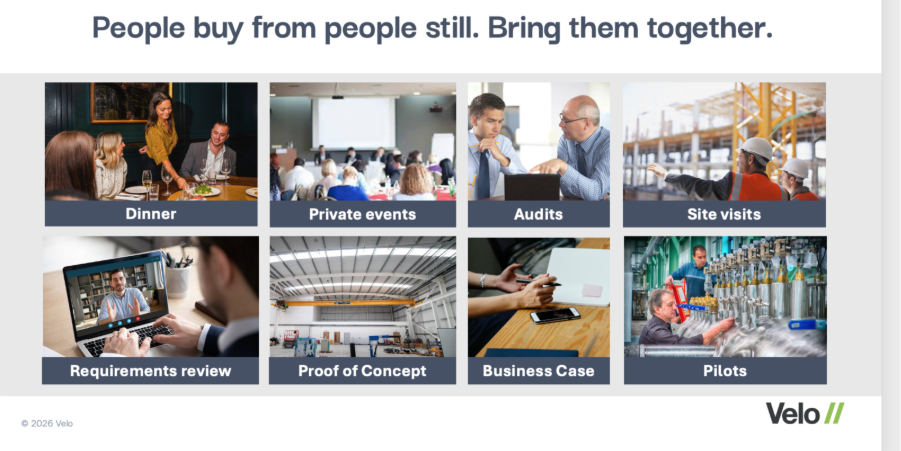
Look at how most serious B2B relationships start. Rarely with a form fill. More often with a conversation at an event, an introduction through a contact, or a discussion during a workshop or site visit.
Follow many successful B2B companies closely and you notice something consistent. They are built on recommendation. Someone suggests them. Someone vouches for them. Someone says they are worth speaking to.
Those recommendations come from trust, reputation and experience built over time.
Marketing’s job is to support that process. Not just at the beginning, but throughout the relationship.
The sales conversation belongs to everyone
This is where many marketing teams misjudge their role.
Once a sales conversation begins, marketing often steps back. In reality that moment is when positioning, messaging and credibility are tested most directly.
Everything marketing has built is now being examined.
Yet in many organisations, sales teams still walk into important conversations with outdated decks or generic case studies.
Marketing could change this. Tailored materials, relevant proof points and clearer narratives can all strengthen these discussions.
This type of work rarely appears in campaign reports or dashboards. Much of the most commercially valuable marketing activity sits inside conversations themselves. It is often hidden in plain sight.
Marketing should be closest to the customer
There is also a quiet irony in many B2B organisations.
The function that claims ownership of the brand is often furthest from the customer experience.
Marketing should be deeply interested in what happens after the deal is signed. Are customers satisfied? What changed for them? Would they recommend the company to someone else?
These signals matter because advocacy drives growth in many B2B sectors. Businesses that perform consistently are often those quietly built on recommendation, where trust accumulates through real experience rather than campaign activity alone.
Marketing should capture these insights and feed them back into how the organisation positions itself and sells.
The KPI problem
Much of the tension between sales and marketing comes from how success is measured.
For many years marketing has relied heavily on metrics with a weak connection to revenue. The MQL became the centrepiece of reporting. Hit the target, pass the leads to sales and move on.
This created frustration on both sides. Marketing believed sales were not following up properly. Sales believed many leads were not serious opportunities.
Attribution models reinforced the problem. By focusing on the final measurable action, they undervalued the longer process that usually leads to B2B decisions.
Events, introductions and recommendations rarely fit neatly into attribution systems. Yet they often play a decisive role.
Lockstep, not alignment
Perhaps the goal should not be alignment at all.
Sales and marketing work best when they operate in lockstep. Complementary, interdependent and focused on the same outcome.
The objective is simple. Make it easier for the right conversations to happen with the right customers, and support those conversations with everything the organisation knows about them.
When companies manage this well, growth rarely looks mysterious.
It often looks like what it was all along. A business built on recommendation, supported by trust and relationships that were there, quietly, hidden in plain sight.