
 Last week, I went to B2B Marketing’s annual ABM Conference. It was a day for B2B marketing professionals to share their experiences of executing ABM strategies. From the conversations, it was clear that “true ABM” is still relatively new and immature, but that the key to success in the future is sharing our experiences and lessons now.
Businesses have been doing ABM-style marketing for a while. It’s the concept of focusing marketing resource and budget on small groups of high-value potential customers and designing personalised campaigns around them. However, true ABM goes one step further, providing more definition and guidance around what ‘small groups’ are and what level of ‘personalisation’ they should have.
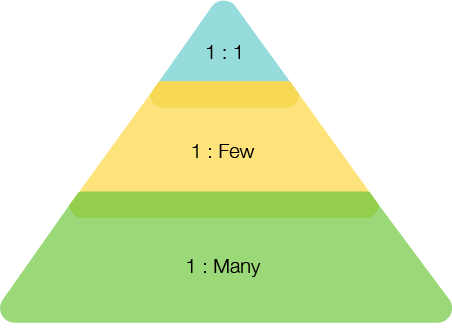
ABM gets you to think about planning campaigns at each level of the ‘ABM triangle’…
The statistics
At the beginning of the day, B2B Marketing’s Head of Content, Mary-Ann Baldwin, spoke about some of the findings from their ABM research report — including adoption maturity, costs and return on investment (ROI).
ABM maturity:
Last week, I went to B2B Marketing’s annual ABM Conference. It was a day for B2B marketing professionals to share their experiences of executing ABM strategies. From the conversations, it was clear that “true ABM” is still relatively new and immature, but that the key to success in the future is sharing our experiences and lessons now.
Businesses have been doing ABM-style marketing for a while. It’s the concept of focusing marketing resource and budget on small groups of high-value potential customers and designing personalised campaigns around them. However, true ABM goes one step further, providing more definition and guidance around what ‘small groups’ are and what level of ‘personalisation’ they should have.
ABM gets you to think about planning campaigns at each level of the ‘ABM triangle’…
The statistics
At the beginning of the day, B2B Marketing’s Head of Content, Mary-Ann Baldwin, spoke about some of the findings from their ABM research report — including adoption maturity, costs and return on investment (ROI).
ABM maturity:
- 37% of marketing professionals are at stage one: understanding
- 24% of marketing professionals are at stage two: preparing
- 29% of marketing professionals are at stage three: delivering
- 5% of marketing professionals are at stage four: upscaling
- 5% of marketing professionals are at stage five: perfecting
- The average set up cost for ABM strategies is £11,600
- The average cost of executing a one to one programme is £10-50k per account
- The average cost of executing a one to few programme is £30-50k per account
- The average cost of executing a one to many programme is £50-100k per annum
- In 2017, on average, 30% of marketing budgets were spent on ABM
- In 2018, on average, 32% of marketing budgets were spent on ABM
- On average, it took 12 months for businesses to see a return on investment
- On average, the USA saw returns on investment after 9.8 months
- On average, the UK saw returns on investment after 13.3 months
